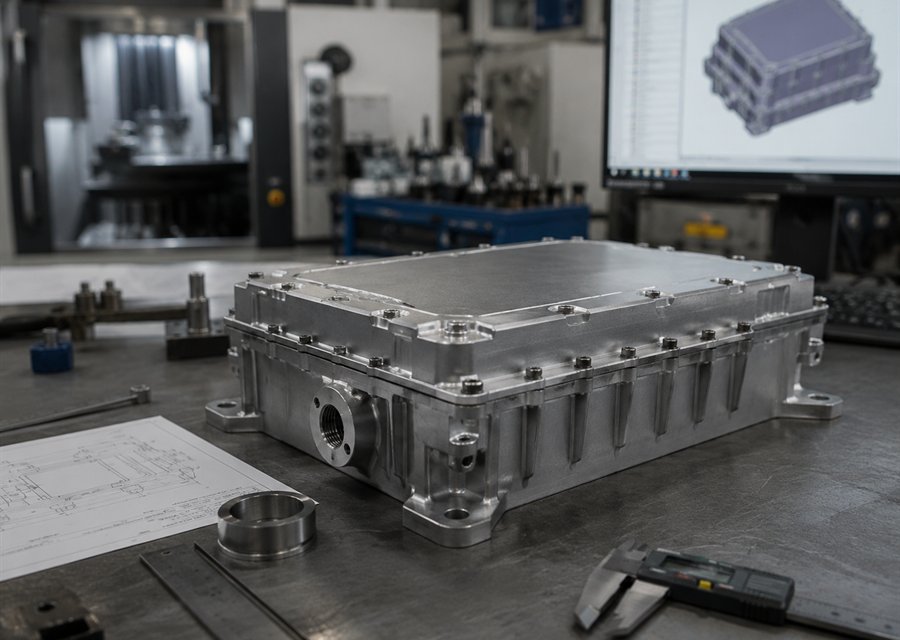
Machined aluminum tool housing enclosure on a workbench

Product Development · Case Study

Industrial-Grade Tool Housing

An ergonomic, durable housing for a professional power tool — designed to survive job-site abuse without punishing the hand holding it.

Consumer Product Design Ergonomics Design for Manufacturing

About the project

A housing that has to survive being dropped.

The client's existing tool housing was functional but uncomfortable over long use, and its parting lines and fastener layout made it more expensive to mold and assemble than it needed to be. They wanted a redesign that improved grip and drop resistance without changing the internal components it had to enclose.

Mazi Inc. worked from the existing internal assembly outward, shaping the housing around real grip geometry and vent placement while restructuring the shell for cleaner tooling and fewer fasteners.

Tool housing prototype with its detail drawing

Our approach

Philosophy & methodology

Philosophy

A housing is the part of the product a person actually touches, and it has to earn trust in the hand before it earns anything on a spec sheet. We treated grip, weight distribution, and drop behavior as design requirements on equal footing with manufacturability, not as cosmetic polish applied at the end.
Methodology

We modeled the existing internal assembly first to lock the true envelope, then developed shell geometry around grip zones and ventilation paths. Parting-line placement and fastener count were reviewed against the client's molding process at every iteration, not just at final sign-off, so manufacturability stayed a constraint throughout rather than a late correction.

What worked

Successes

  • Fastener count dropped through a revised shell split, simplifying assembly on the client's line.
  • Grip geometry was validated against hand-size ranges before committing to tooling.
  • Vent placement was reworked to improve cooling without opening new ingress points for dust and debris.

What we navigated

Challenges

  • The internal assembly couldn't change, which constrained shell geometry more than a clean-sheet design would have.
  • Balancing wall thickness for drop resistance against the client's target unit weight took several rounds of iteration.
  • The client's existing tooling vendor had process limits that ruled out our first-choice parting line.
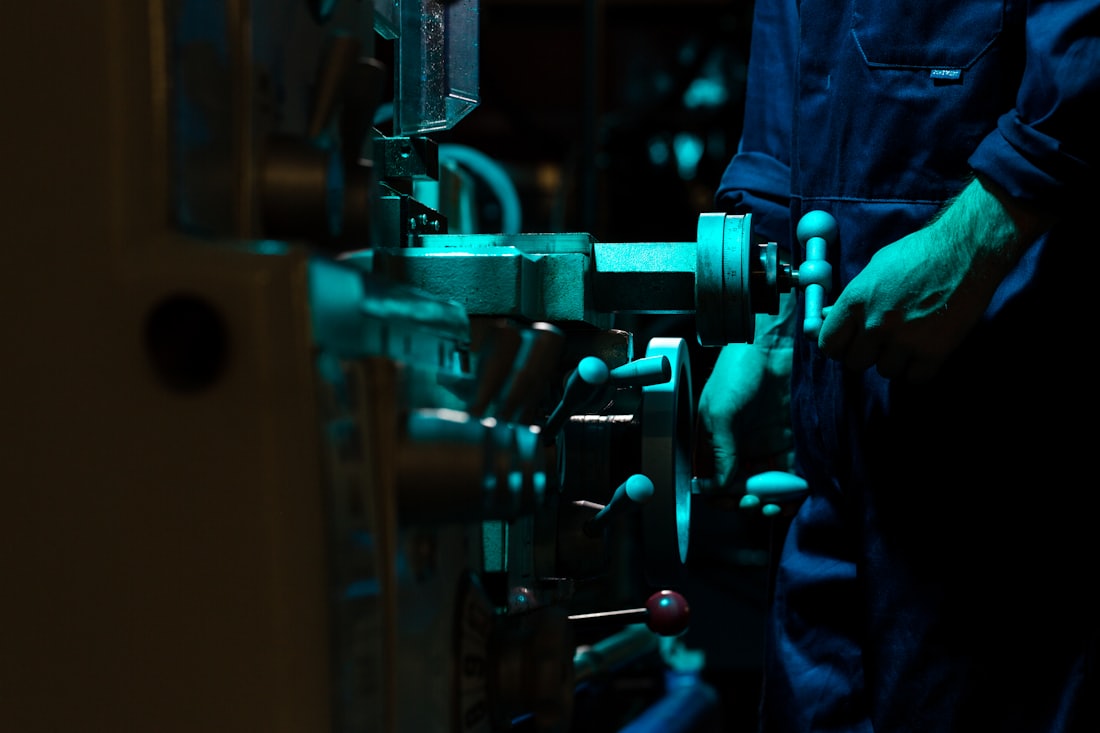
Machinist working at a production machine
Tooling limits shaped the parting line before the geometry was fixed

Looking back

Lessons learned

Locking the internal envelope before touching exterior geometry saved real time — it meant every later grip and vent iteration was working within a boundary that wasn't going to move. The tooling-vendor constraint was a useful reminder to bring manufacturing partners into the conversation earlier than "final review," since a molding limitation discovered late costs far more than one discovered during concept development.

Why Mazi Inc.

Why Mazi Inc. for product enclosures

Ergonomics as a requirement

Grip, weight, and handling are engineered from the first concept, not adjusted after the fact.

Manufacturing-aware

Parting lines, fastener count, and tooling limits are design inputs, reviewed continuously with your process.

Assembly-constrained design

We design the shell around the real internal assembly, not a simplified placeholder.

Redesigning an enclosure?

Send the internal assembly and current pain points. We'll help scope a housing that actually holds up.