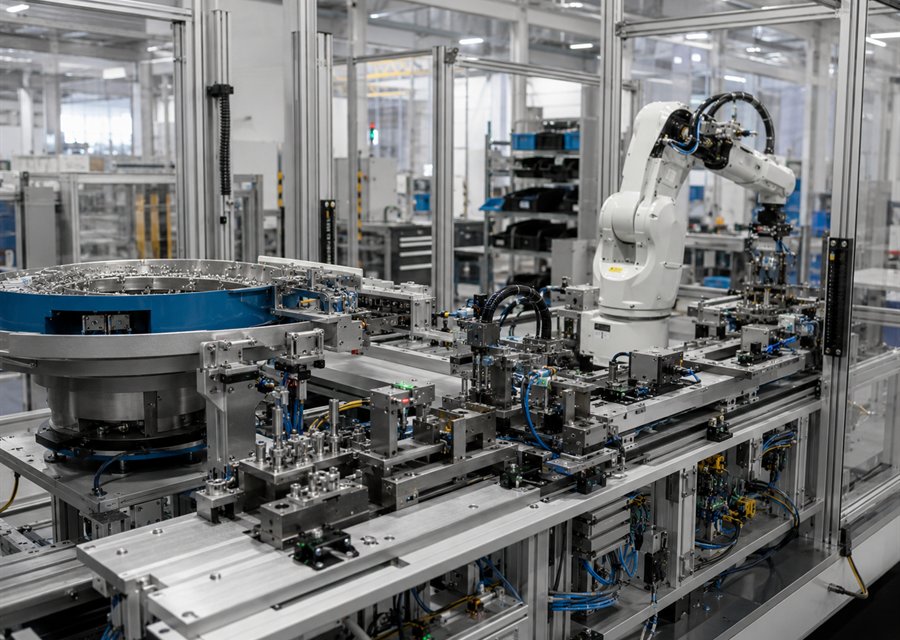
Robotic automated assembly line

Manufacturing · Case Study

Automated Assembly System

A custom automated assembly line built around robotic handling, precision fixturing, and integrated quality control — designed to remove bottlenecks without adding fragility.

0%Production throughput increase
0%Labor cost reduction
0%Quality consistency rate
0Month return on investment

About the project

A manual line at its limit.

The client's assembly process was manual, inconsistent, and increasingly expensive to run. Production bottlenecks were capping output, labor costs were climbing, and quality varied enough between shifts that downstream inspection was catching problems that should never have reached it. They needed a line that could hold a tighter standard without needing more hands to run it.

Mazi Inc. was brought in to design a replacement system from the fixture level up: robotic end-effectors for part handling, precision alignment fixturing, automated inspection stations, and the production monitoring to tie it all together.

Robotic assembly cell during commissioning

Our approach

Philosophy & methodology

Philosophy

Automation is only worth adding where it removes real variability, not where it looks impressive. Every station on this line earned its place by fixing a specific, named problem in the old process — not by being the newest available technology. That discipline kept the system simpler to maintain and easier for the client's own team to eventually service in-house.
Methodology

We started by mapping the manual process step by step, timing each operation and logging where defects actually originated, not where they were assumed to originate. Fixture and end-effector concepts were modeled and reviewed against tolerance stack-ups before any hardware was ordered, and the inspection logic was defined alongside the mechanical design rather than bolted on afterward.

What worked

Successes

  • Robotic end-effectors handled the part family without tooling changeovers between variants.
  • Precision fixturing held alignment tolerances tight enough to eliminate a downstream rework step entirely.
  • In-line inspection caught defects at the station where they occurred, instead of at final QC.
  • Production data from the monitoring system gave the client real visibility into where time was actually going.

What we navigated

Challenges

  • The line had to be commissioned in phases so the client's existing production couldn't stop for a full changeover.
  • Part-to-part variation in incoming components meant the fixturing needed more compliance built in than the original spec assumed.
  • Integrating the new inspection stations with the client's existing quality-tracking software took more coordination than the mechanical design itself.
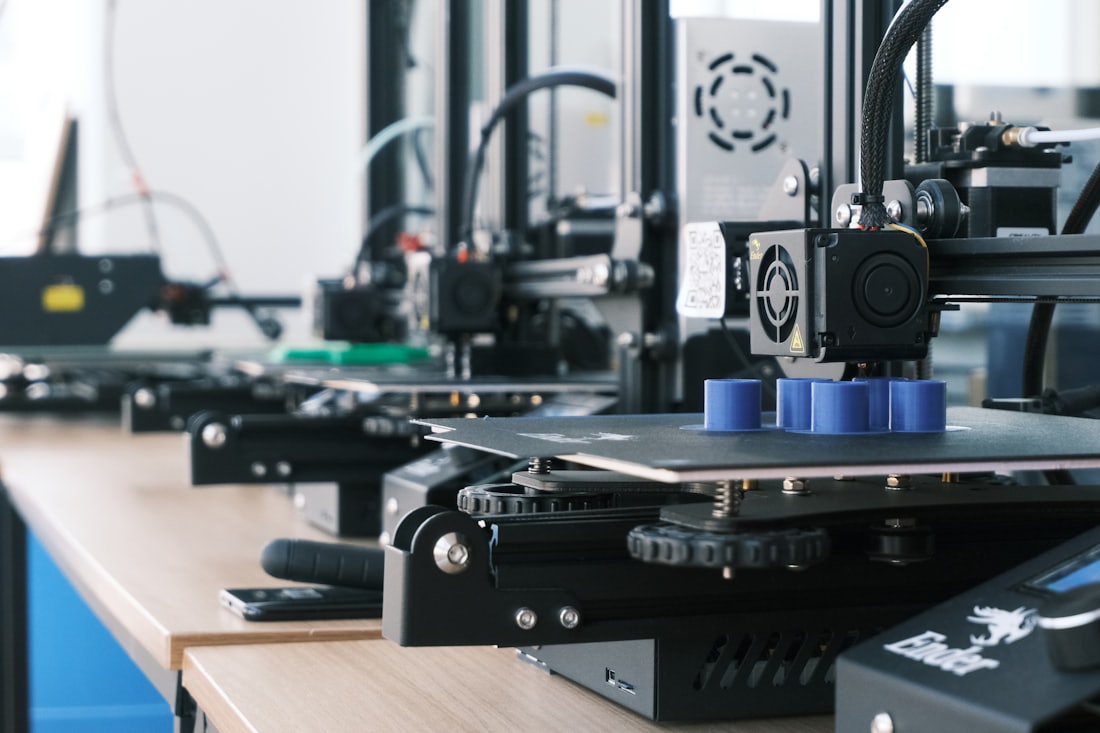
Row of additive machines running unattended
Automated cells only pay off where they remove real variability

Looking back

Lessons learned

The biggest lesson wasn't mechanical — it was sequencing. Designing the fixturing and the inspection logic together, instead of treating inspection as a downstream add-on, is what let the system hit a 99.8% consistency rate instead of just a faster version of the old inconsistency. The phased commissioning also proved out a pattern we now use by default on any retrofit: prove each station in isolation against the live line before asking the whole system to run together.

Why Mazi Inc.

Why Mazi Inc. for automation projects

Mechanical-first automation

We design the fixturing and handling as real mechanical systems, not an afterthought bolted onto a robot catalog part.

Root-cause driven

We trace defects to where they actually start before proposing automation, so the investment fixes the real problem.

Built to be maintained

Systems are documented and designed so your own team can service and adjust them, not just Mazi Inc.

Have a similar bottleneck?

Send the part, the current process, and where it's breaking down. We'll help scope what automation actually earns its keep.